 Keep My Acres
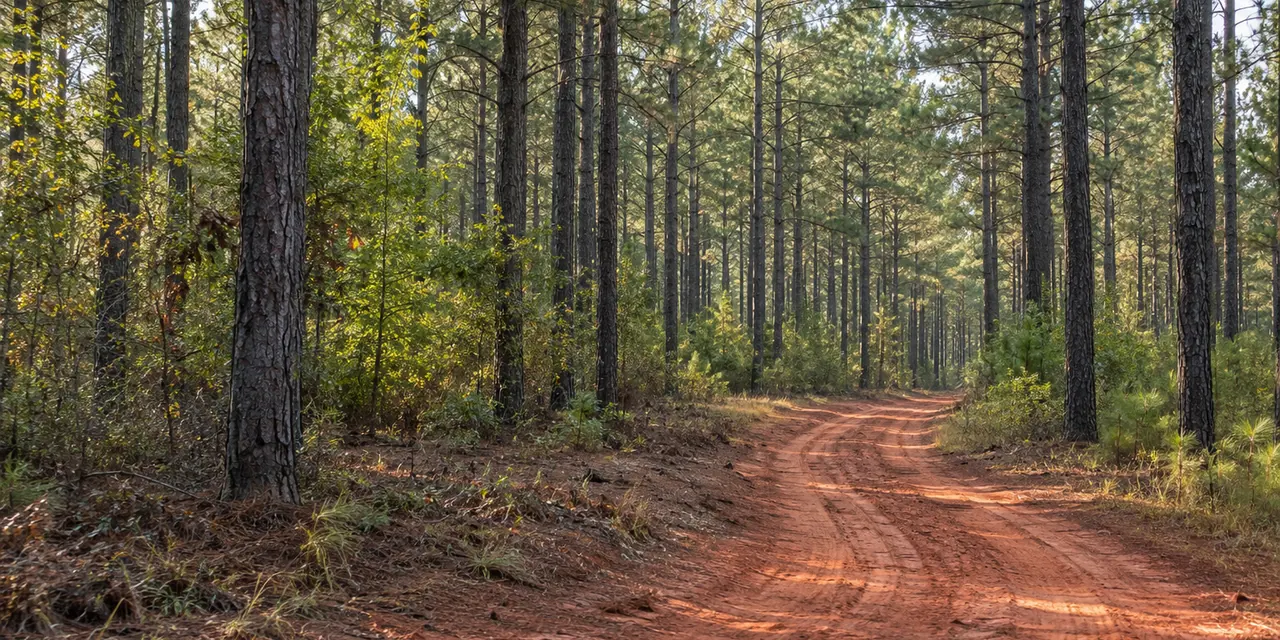
 Most of the land here is timber
In our six counties, timber is the biggest share of land with special valuation. In Tyler County it's 9 out of every 10 acres:
Timber acres as a share of all acres under ag, timber or wildlife valuation. From the Comptroller's Property Value Study, 2025 (Angelina 2024).
 What the law requires
Timber has its own section of the Tax Code, separate from ag. Land qualifies if it is "currently and actively devoted principally to production of timber or forest products to the degree of intensity generally accepted in the area with intent to produce income" (Tax Code §23.72).
It also needs history: timber or qualifying ag use for five of the preceding seven years. Ag years count toward timber, so pasture that's been in ag can be planted in pine without starting over.
Standing trees aren't enough. The Comptroller's timber manual says land "does not qualify simply because it has timber standing on it or if it is used principally for aesthetic or recreational purposes."
 What "managed" looks like
The law doesn't set the standard. Each district's chief appraiser does, based on what prudent timber growers in the area do. The Comptroller's manual describes three levels:
From the Comptroller's Manual for the Appraisal of Timberland, Exhibit 2.
 The management plan
A written forest management plan is the clearest proof. The manual says a plan "must be in writing, developed for the present time and signed by the preparer. An outdated plan is not acceptable."
Trinity CAD requires one: "Must have a Timber Management Plan returned with applications on 20 acres or less." Angelina CAD requires one under 20 acres and sets a 10-acre minimum. San Jacinto CAD requires a current plan, about 20 acres, and replanting within 2 years after a cut. Ask your district whether it wants one at your acreage.
Free help. Texas A&M Forest Service writes management and stewardship plans for landowners, "at no cost to the landowner." Request a forester visit. Turnaround runs from a couple of weeks to a couple of months.
 Records to keep
The manual lists what shows current, active timber use. Keep proof of each:
Harvest and sale papersTimber sale contracts, settlement sheets, canceled checks. Planting and thinningSeedling receipts, site-prep and thinning invoices.A current planWritten, signed, and not outdated.
 Cost-share and leasesTRe, EQIP or CRP cost-share papers. Land leases.
 After a harvest
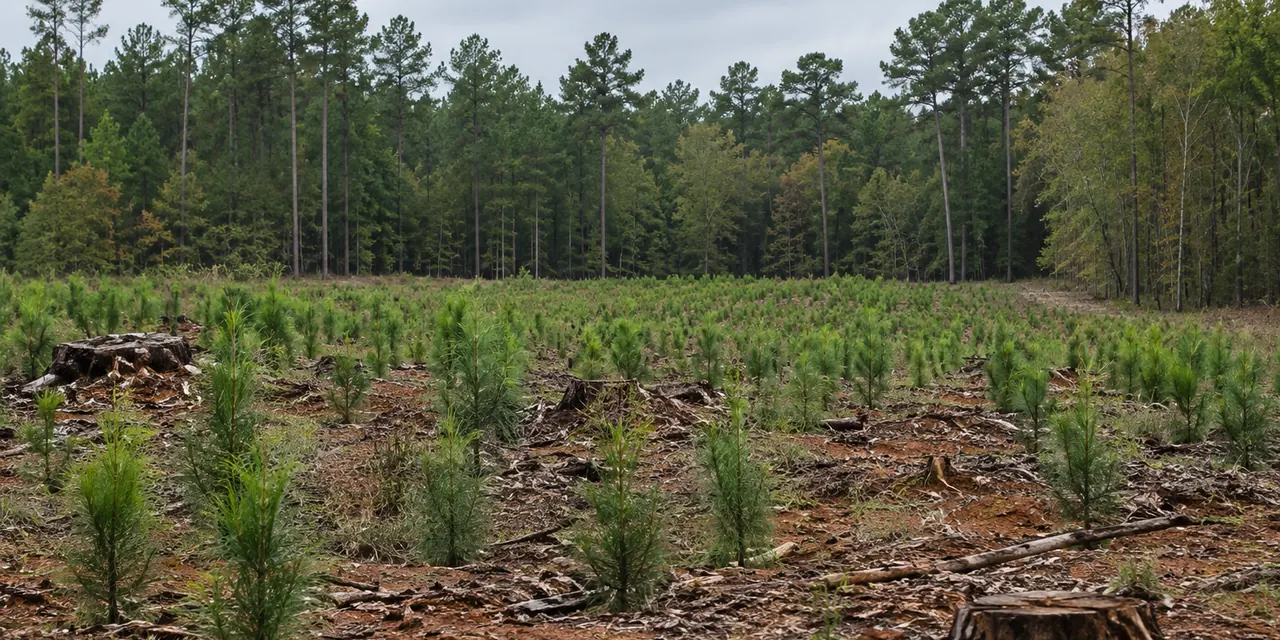
Cutting timber doesn't end timber use. Cutting it and walking away does. The manual's example of a change of use: the grower "had the timber cut, does not plant new trees and shows no intention of replanting." That land gets a rollback bill.
You replant or manage natural regrowth
- Seedlings planted, or seed trees left to regrow
- May qualify for restricted-use timber at half value
No replanting, no intent to
- The district treats it as a change of use
- Timber valuation ends
Based on the Comptroller's timber manual, p. 21, and Tax Code §23.76.
Fires, droughts and freezes that slow regrowth don't count against you. The manual says reduced intensity "resulting from acts of nature does not prompt a loss of timber productivity appraisal."
Restricted-use timber: half the value for 10 years
After a final harvest (a clear-cut, seed-tree or shelterwood cut), land that's replanted or naturally regenerated can apply for restricted-use timber appraisal. The value is "one-half of the value" it would have as regular timberland, for 10 years after harvest. Land in protected streamside, wildlife-habitat or roadside-buffer zones can also qualify.
It takes a separate form: Form 50-281. Texas A&M Forest Service guidance counts regeneration as adequate with "at least 300 well-distributed, desirable seedlings per acre" free to grow within two years.
 Rollback for timber
Timber rollback is the tax saved over the three years before the change of use (Tax Code §23.76), billed when the land stops being timber. If only part of the tract changes, rollback applies only to that part.
Switching between timber and ag (or wildlife) is not a change of use. Tax Code §23.55(g) and §23.76(g) both say so. See the rollback guide for the calculator.
 Applying, and buying timberland
Timber uses its own form: Form 50-167, not the ag form. It's due April 30. Once approved, it carries forward each year "unless the ownership changes," so a new owner files a new application. See bought land with ag valuation and the 2026 law change for the new-owner rules.
 What it's worth
Timber land is valued on what it earns growing trees, not what it would sell for. In 2025 the districts' average timber value ran from about $170 an acre (Walker) to $250 (San Jacinto). Pick "Timber" in the calculator on your county page.
Related guides
Your county
General information, not legal or tax advice. Your appraisal district makes the final call.