 Keep My Acres
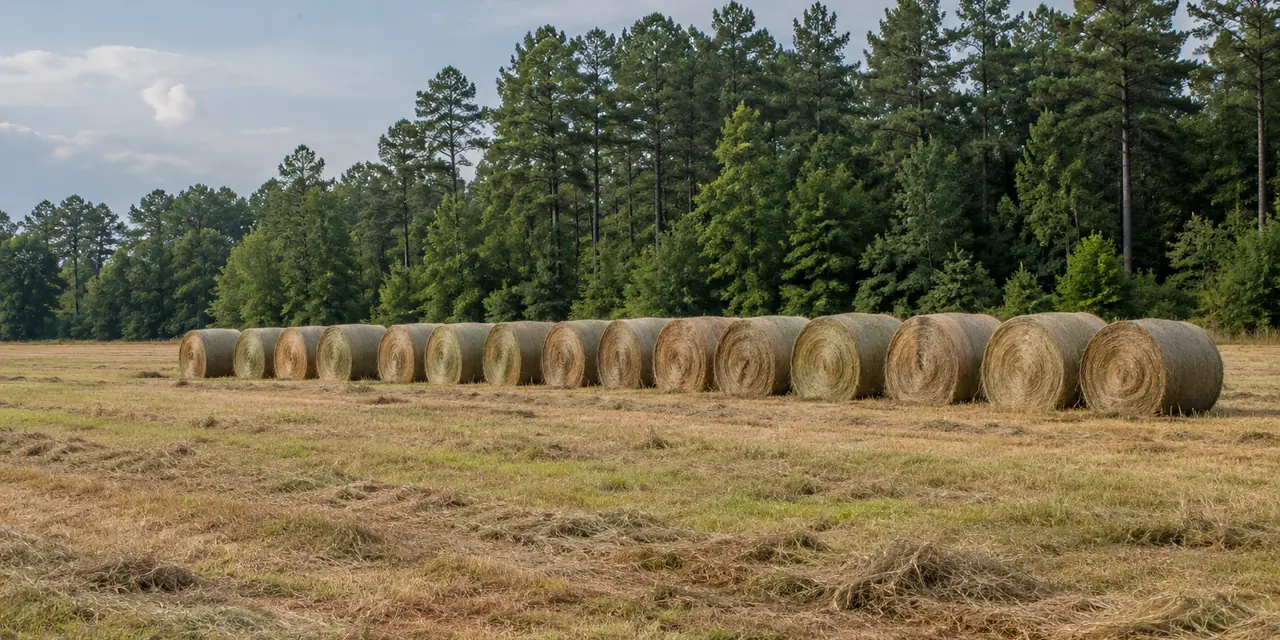
 Hay counts as ag use
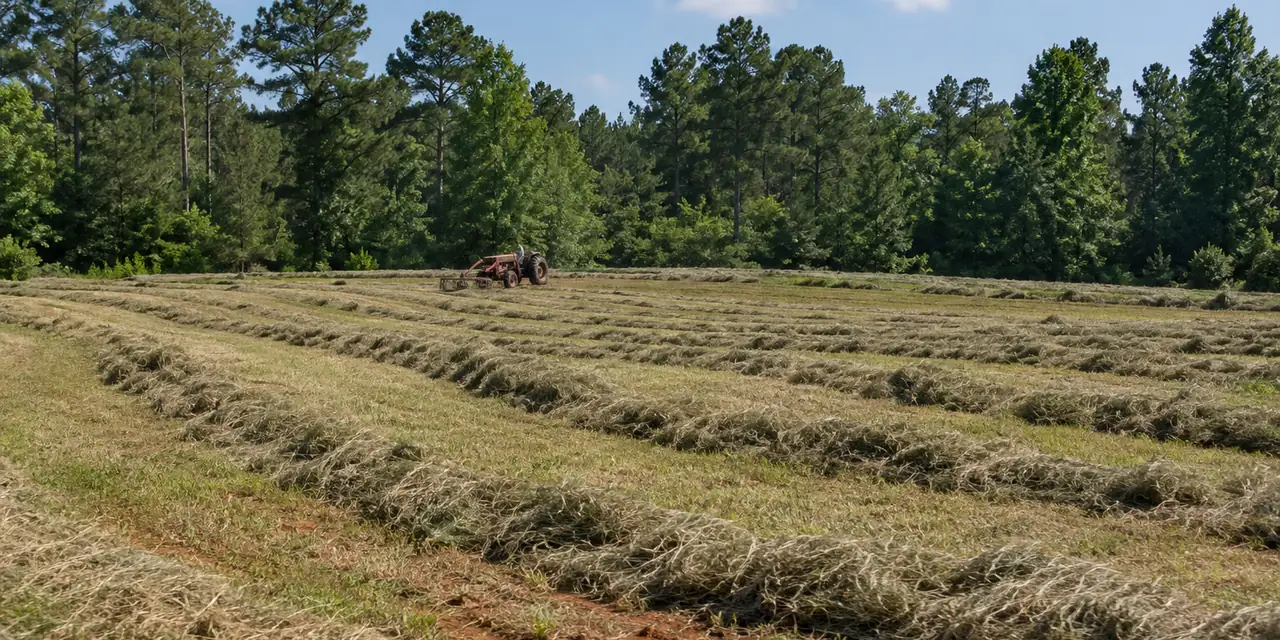
Texas law lists "producing crops for human food, animal feed or planting seed" as an agricultural use (Tax Code §23.51(2)). Hay is a crop grown for animal feed. It counts whether you sell it or feed it to your own cattle.
Like every ag use, it has to be done to the degree of intensity generally accepted in the area. The Comptroller's manual says that test exists "to exclude land on which token agricultural use occurs." Mowing a pasture once a year and leaving the bales to rot isn't a hay operation.
 Each district sets its own standard
The law doesn't say how many cuttings or how much fertilizer it takes. The chief appraiser of each appraisal district sets the standard for typical operations in the area. Of our six counties, Trinity, San Jacinto and Angelina CADs publish written hay standards. Trinity's:
 Early in the yearFertilize heavily: 300 to 500 lbs. per acre. Top-dress later as needed.
 Growing seasonNo animals on the hayfield. Two cuttings in a normal (non-drought) year.
 WinterAnimals may be wintered on the hayfield.
From Trinity CAD's published guidelines. Smaller tracts are reviewed case by case. Other districts may expect something different.
Angelina CAD's guidelines ask for at least 10 acres and three cuttings a year. San Jacinto CAD asks for about 10 acres, 2 cuttings and roughly 3,000 lbs. an acre, and says cutting unmanaged grass isn't hay production. Polk, Tyler and Walker CADs don't publish hay standards that we could find. Call yours and ask: how many cuttings, whether they want fertilizer receipts, and whether cattle can graze the field. District phone numbers.
 Letting someone else cut it
Many East Texas landowners don't own a baler. A neighbor or a hay producer cuts the field and keeps or splits the hay. That can work, because the district looks at how the land is used. A 2026 law even talks about land whose use is "overseen or conducted" by other people (2026 law guide).
Put it in writing. A short lease with the hay man's name, the acres, and how often he cuts makes it easy to show the district a real operation. Ask your district if it wants a copy.
 Records to keep
The Comptroller's manual says the test is what you put in: "time, labor, equipment, management and capital." Keep proof of each:
Fertilizer and seed receiptsDated, with the acres they covered.Cutting datesWhen each cutting happened and the bale count.Where the hay wentSale receipts, or a note that it fed your own cattle. The leaseIf someone else cuts it: a written lease with their name and the acres.
Hay and cattle on the same land
Hay you grow and feed to your own herd is part of a cattle operation. Land under the barn where the hay is stored can qualify too, if it supports the ag use on the tract (Comptroller manual, Appendix A, Question 8). Trinity CAD's rule is the thing to watch: no animals on the hayfield while it's growing, but they can winter there.
 What it's worth
Hayfields are usually classed as improved pasture, which carries a higher ag value per acre than native pasture. Even so, the tax is a small fraction of market value. Use the calculator on your county page and pick "Improved pasture."
Related guides
Your county
Each county's appraisal district sets its own hay expectations:
General information, not legal or tax advice. Your appraisal district makes the final call.