 Keep My Acres
 Livestock counts as ag use
Texas law counts "raising or keeping livestock" as ag use. The Comptroller's manual spells out what livestock means: "beef or dairy cattle, horses, goats, swine, poultry and sheep. Wild animals are not livestock."
Two tests apply to every animal. The land has to be used principally for ag, not as a hobby or for recreation, and the operation has to match the degree of intensity typical in the area.
 What one district expects, by animal
The law sets no head counts. Each district sets its own. Of our six counties, Trinity CAD publishes the most detailed per-animal standards:
CattleAt least 5 mother cows. About 1 cow per 5 acres on larger tracts. At least 75% open to grazing. HorsesBreeding only: at least 3 mares producing colts, proof of colt sales. About 1 horse per 2.5 acres. Boarding, training and showing don't count.
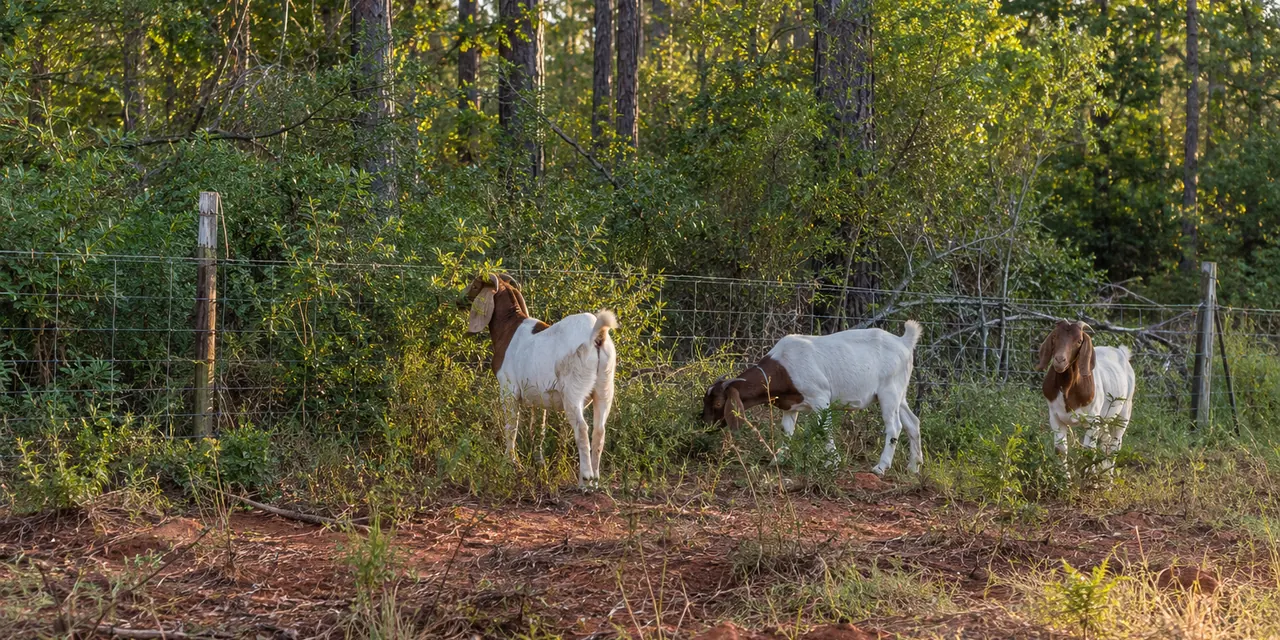
 GoatsAt least 7 nannies. Enough forage for 7 goats per 5 acres. Land can be partly wooded. Meat or milk, not only show animals.
 SheepAt least 7 ewes. Enough forage for 7 sheep per 5 acres. Wool or mutton, not only show animals.
From Trinity CAD's published guidelines, pp. 2–3. Smaller tracts are reviewed case by case. Angelina CAD lists minimum acres instead: cow/calf 20 acres native or 15 improved, horse breeding 10, dairy goats 3. San Jacinto CAD sets higher counts: 20 breeding goats or ewes on about 10 acres, 4 breeding mares, and it excludes FFA and 4-H project animals. Polk, Tyler and Walker don't publish numbers we could find. Call yours and ask.
Horses: breeding yes, boarding no
Horses are where most people get tripped up. The Texas Supreme Court case the manual relies on (Tarrant Appraisal Dist. v. Moore, 1993) draws the line: raising, breeding and grazing horses is ag use. But if the land is used "to show, train, stable, race, care for or otherwise divert livestock from a farm or ranch purpose," that land doesn't qualify.
Breeding and raising
- Mares, foals, grazing, hay for them
- The barn that supports it can count too
Boarding, riding, showing
- Pleasure riding, a riding ring, show horses
- Boarding other people's horses
From the Comptroller's manual, p. 8 and Appendix A, Questions 19 and 20.
The manual's examples: on a horse-breeding ranch, the pasture, feed land and stables qualify, but the five acres with a racetrack don't. A small tract where horses are boarded for pleasure riding and shows doesn't qualify at all.
Goats and sheep
Goats and sheep qualify the same way cattle do: a real operation producing meat, milk or wool. Trinity CAD's guidelines say the operation should not be "strictly to be sold for showing purposes." A few show goats for the kids' 4-H project are a good thing, but on their own they don't keep the valuation.
 Exotics
Exotic animals, like axis deer, can qualify, but only if the purpose is "the production of food or other commercially valuable products." The manual says "any exotic game ranch devoted solely to hunting animals could never qualify." Its example that does qualify: a high-fenced axis deer herd harvested on a schedule, with meat and hides sold to commercial dealers. More on exotics, breeder deer and high fences in the deer and exotics guide.
 Leasing to a neighbor's cattle
Most East Texas ag land isn't grazed by the owner's own cows. It's leased to a neighbor. That's normal: the Comptroller's manual builds ag values from typical local grazing lease rates. What matters is that the land is grazed at the level the district expects. Get the lease in writing, with the head count and the acres.
 Records to keep
Sale receipts (calves, colts, kids, lambs), vet and feed bills, a written grazing lease if someone else runs the animals, and photos of fences and water. For horses, proof of colt sales matters most.
Related guides
Your county
General information, not legal or tax advice. Your appraisal district makes the final call.